
How to Prepare Current Affairs for Teaching Exams Without Losing Focus

Preparing for teaching exams like UGC-NET, PGT/TGT, DSSSB, KVS, and NVS already feels like a marathon. The syllabus is vast, with subjects ranging from pedagogy to research aptitude, and then there is the additional demand of current affairs.
While current affairs are crucial, many aspirants waste hours on irrelevant news or get overwhelmed by the flood of information. The key is to prepare smartly covering what matters for exams while staying focused on your core subjects.
In this blog, we will discuss:
- Why current affairs matter in teaching exams
- Common mistakes aspirants make
- Smart sources for current affairs
- Daily, weekly, and monthly strategies
- How to integrate CA with pedagogy & subject prep
- A sample 30-day current affairs plan
Join Ardas Classes Now
India's Best UGC-NET Coaching Centre
Why Are Current Affairs Important in Teaching Exams?
For most aspirants, the phrase “current affairs” often feels like memorizing endless news headlines. But current affairs in teaching exams play a much deeper role. They are not tested as random trivia; instead, they help examiners judge whether a candidate is aware, updated, and capable of connecting knowledge with real-world teaching.
Here is why they are so important:
1. Paper 1 (UGC-NET): More Than Just Static Knowledge
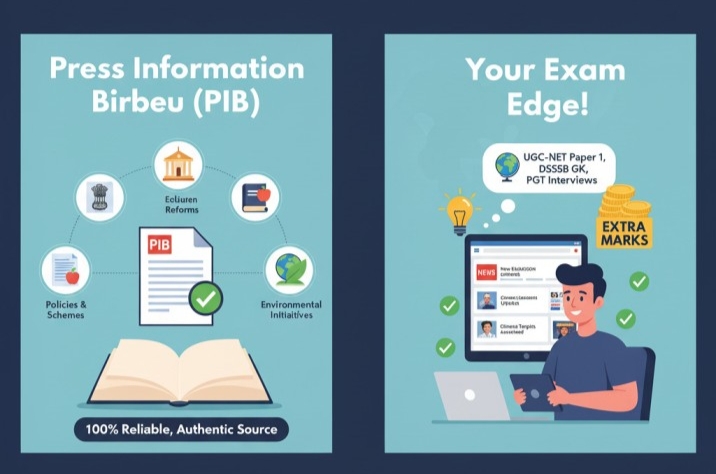
In UGC-NET, Paper 1 includes questions on higher education, teaching aptitude, environment, governance, and research. Many of these are directly linked to recent developments.
For example:
- Questions on higher education reforms may come from policies like NEP 2020, changes in UGC guidelines, or AI-based teaching initiatives.
- Environmental questions often pick up issues like COP climate summits, UN sustainability goals, or India’s clean energy policies.
- Even teaching aptitude questions can include current educational challenges, like online learning post-COVID.
This shows that if you stay updated with relevant current affairs, you can score extra marks in Paper 1 with very little effort.
2. PGT/TGT/DSSSB/KVS/NVS Interviews: Testing Awareness Beyond Books
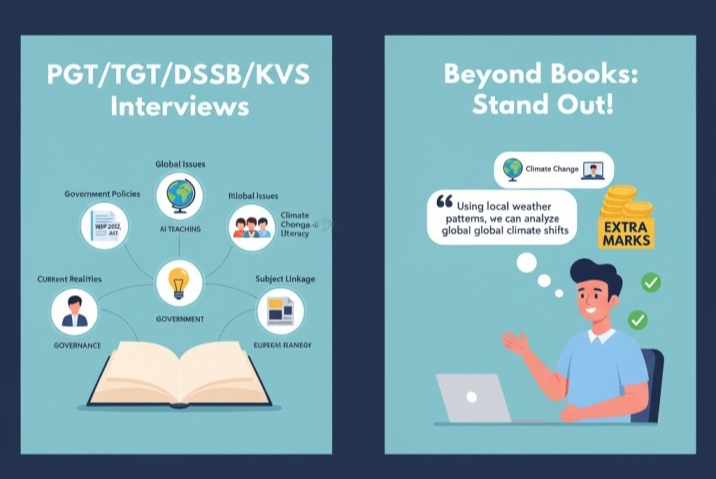
Once you clear the written exam, the interview stage becomes the real test. Here, panels are not just checking your subject expertise but also your awareness as an educator.
They want to know:
- Do you understand how government policies affect classrooms? (e.g., implementation of NEP 2020 or Right to Education Act).
- Are you aware of global issues like climate change, digital literacy, or inclusive education?
- Can you link teaching subjects with current realities to make learning meaningful for students?
For example, a Geography aspirant may be asked:
“How would you explain climate change to high school students using current events?”
This is where current affairs knowledge can help you give relevant, engaging answers that make you stand out in interviews.
3. Teaching Aptitude & Pedagogy: Making Subjects Engaging
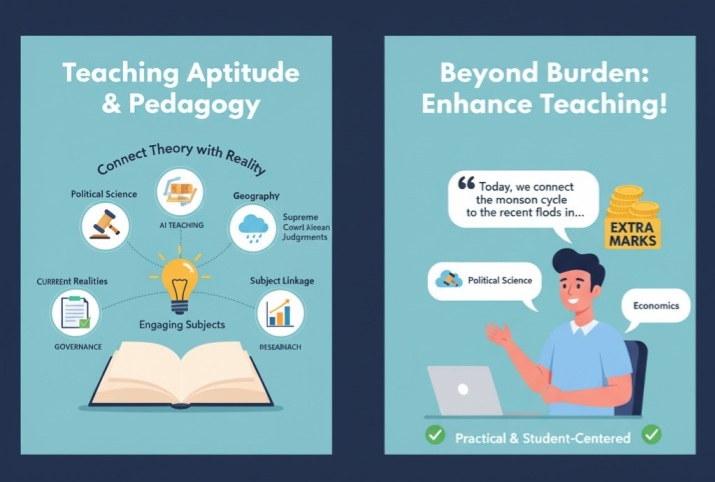
Great teachers connect theory with reality. Teaching exams test whether you can do that.
- If you’re teaching Political Science, you should connect the Constitution with recent Supreme Court judgments.
- If you’re preparing for Geography, you should be able to explain monsoons by linking them with recent flood or drought events.
- For Economics or Education, linking government budgets, policies, and reforms shows that you are not just teaching concepts but also making them practical and student-centered.
This is why current affairs are not an “extra burden” but a tool to enhance your teaching aptitude and demonstrate your readiness for the classroom.
For a deeper dive into this, you can also check our detailed blog on Role of Current Affairs in Teaching Exams
Common Mistakes in Preparing Current Affairs
Most aspirants understand that current affairs are important, but they approach them the wrong way. As a result, they end up spending too much time without retaining much. Here are the most common pitfalls:
1. Trying to Read Every Newspaper Cover to Cover
Many aspirants start their day by reading the entire newspaper, from politics to sports to entertainment. This may improve general knowledge, but it is not exam-focused. For teaching exams, you only need selective areas like education, government policies, environment, and social issues. Reading irrelevant news wastes valuable study hours.
Tip: Learn to filter news. A 30–40 minute focused reading session is enough.
2. Getting Lost in Political Controversies
Political debates, opinion columns, and controversies dominate the media, but they hardly ever appear in exams. Instead of memorizing party-based news, aspirants should focus on policy-level decisions, reforms, and their classroom relevance.
Tip: Ignore sensational news; concentrate on government notifications, policy changes, and education-related updates.
3. Not Maintaining Organized Notes
Aspirants often rely on memory or scattered notebooks. This makes revision before the exam chaotic. Since current affairs are time-sensitive, organized notes are the only way to revise quickly.
Tip: Maintain a separate CA notebook or digital notes (OneNote, Notion, or Google Docs). Use bullet points, mind maps, or charts.
4. Skipping Revision
Even if you read current affairs daily, without revision, you will forget older news. Exams usually test 6–8 months of CA, so skipping revision means losing marks on earlier events.
Tip: Revise weekly and monthly. Quizzes, flashcards, and summaries help reinforce memory.
Smart Sources for Current Affairs
The key to success is not reading everything, but reading the right things consistently. Here are the most reliable, exam-focused sources:
1. PIB (Press Information Bureau)
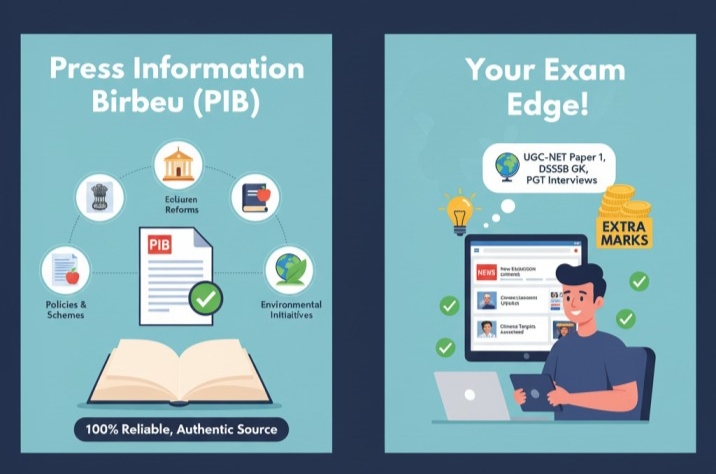
The most authentic source of government information. It publishes press releases on policies, schemes, education reforms, and environmental initiatives. Since it comes directly from the government, it’s 100% reliable for exams.
Best for: UGC-NET Paper 1, DSSSB GK, and PGT interviews.
2. Yojana & Kurukshetra Magazines
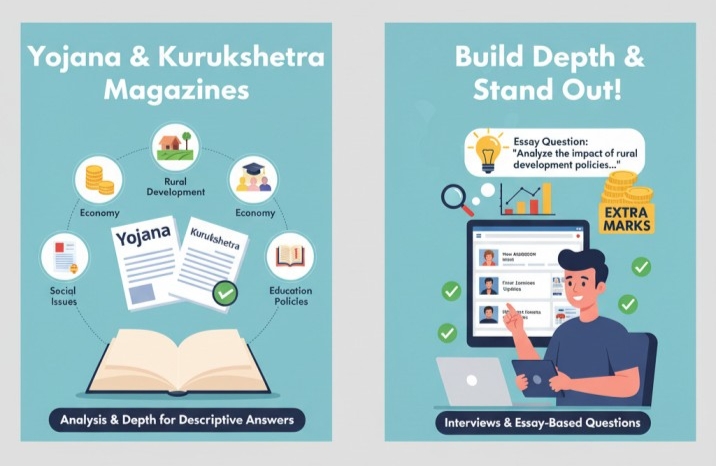
Published by the Government of India, these magazines cover social issues, rural development, economy, and education policies. They are not just for facts, but also for analysis, which helps in interviews and descriptive answers.
Best for: Building depth for interviews and essay-based questions.
3. Newspapers (The Hindu / Indian Express)
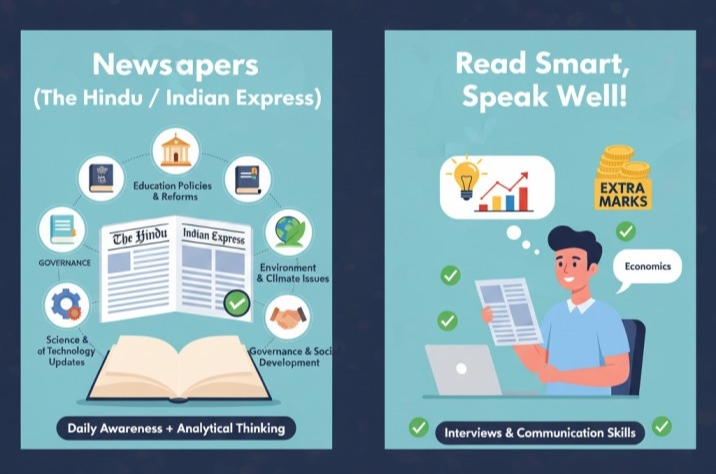
Reading a quality newspaper daily builds awareness and analytical thinking. But you don’t need to read everything. Just focus on:
- Education policies & reforms
- Environment & climate issues
- Governance & social development
- Science & technology updates
Best for: Daily awareness + improving communication skills for interviews.
4. Monthly Compilations
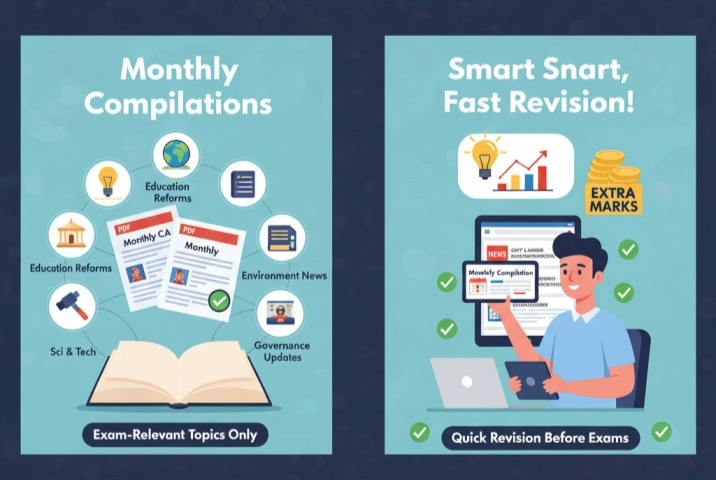
Many coaching platforms release monthly PDFs summarizing current affairs. These save time because they include only exam-relevant topics. Instead of daily clutter, you can revise 1–2 monthly compilations.
Best for: Quick revision before exams.
5. NCERT & NIOS Updates
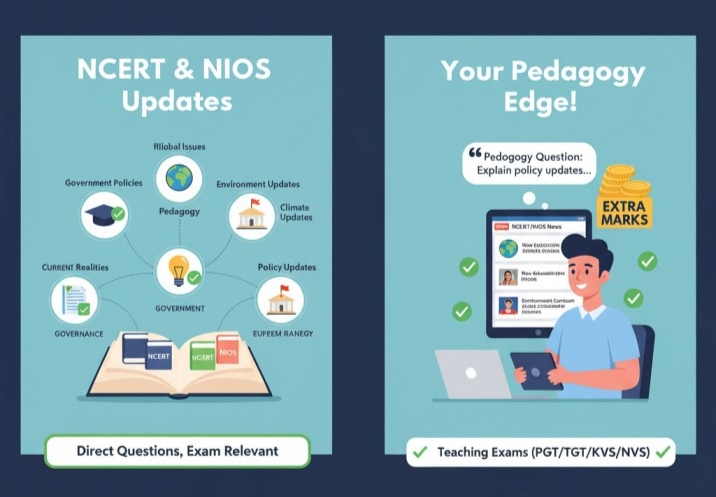
Surprisingly, some questions are directly framed from government-published school-level resources. NCERT and NIOS often include policy-related or environment-based updates that show up in competitive exams.
Best for: Teaching-related exams (PGT/TGT/KVS/NVS), especially pedagogy + environment sections.
Daily, Weekly & Monthly Current Affairs Strategy
Daily (30–40 minutes max)
- Scan The Hindu / Indian Express editorial & national news.
- Note down 3–4 important items (education, science, policies).
- Skip celebrity, entertainment, or irrelevant political news.
Weekly
- Revise daily notes.
- Watch 1–2 hours of current affairs summary videos.
- Update your mind maps for topics like NEP, climate change, or new schemes.
Monthly
- Use a monthly magazine/compilation for revision.
- Attempt current affairs quizzes (UGC-NET Paper 1, DSSSB GK sections).
- Revise notes with highlights.
Related blog: 10 Time Management Techniques to Ace UGC-NET
Join Ardas Classes Now
India's Best UGC-NET Coaching Centre
How to Integrate Current Affairs with Subject Preparation
One of the smartest ways to prepare is to connect CA with your subject. For example:
- Geography aspirants: Link climate change, disasters, population census, and environmental policies.
- Political Science aspirants: Focus on Parliament sessions, constitutional amendments, elections, Supreme Court judgments.
- Education/Teaching Exams: Prioritize NEP 2020, NCF, RTE Act, digital education reforms.
- General Aptitude (Paper 1): Use data from economy, environment, higher education reforms.
This integration makes learning relevant, easier to remember, and useful for interviews.
Quick Framework: How to Study Current Affairs Without Losing Focus
- Fix Time Limit – Max 45 mins daily. Don’t over-consume.
- Choose Limited Sources – Stick to 2–3 quality sources.
- Make Notes – Write in bullet points or mind maps.
- Revise Weekly – Repetition is the key to memory.
- Practice with PYQs – Check past UGC-NET & DSSSB current affairs questions to identify patterns.
Sample 30-Day Current Affairs Plan
Here is a practical one-month strategy:
- Days 1–7: Cover government schemes + NEP-related updates.
- Days 8–14: Environment & climate change issues.
- Days 15–21: International organizations (UN, WTO, UNESCO) and India’s role.
- Days 22–27: Economic & social issues (budget, census, education reforms).
- Days 28–30: Revision + quizzes.
FAQs on Current Affairs Preparation
Q1. How many months of current affairs are enough for UGC-NET/PGT exams?
Usually, 6–8 months before the exam are most relevant.
Q2. Do KVS/NVS ask current affairs in written exams?
Mostly GK + education-related, but interviews definitely assess awareness.
Q3. Is it necessary to read The Hindu daily?
Not mandatory. Any reputed newspaper + monthly compilation is enough.
Q4. Can I skip political controversies?
Yes. Focus only on governance, policies, and education-related updates.
Q5. How do I revise current affairs effectively?
Use mind maps, short notes, and attempt quizzes regularly.
Conclusion
Preparing current affairs for teaching exams does not have to drain your energy or distract you from core subjects. The key is to study smart: focus on relevant topics, use limited sources, and integrate issues with your subject.
At Ardas Classes, we guide aspirants in covering exam-specific current affairs in a structured manner so they never lose focus. With the right approach, you will be prepared not only for written exams but also for interviews, where awareness of current issues gives you a definite edge.
Stay consistent, revise regularly, and you will master current affairs without stress.


